
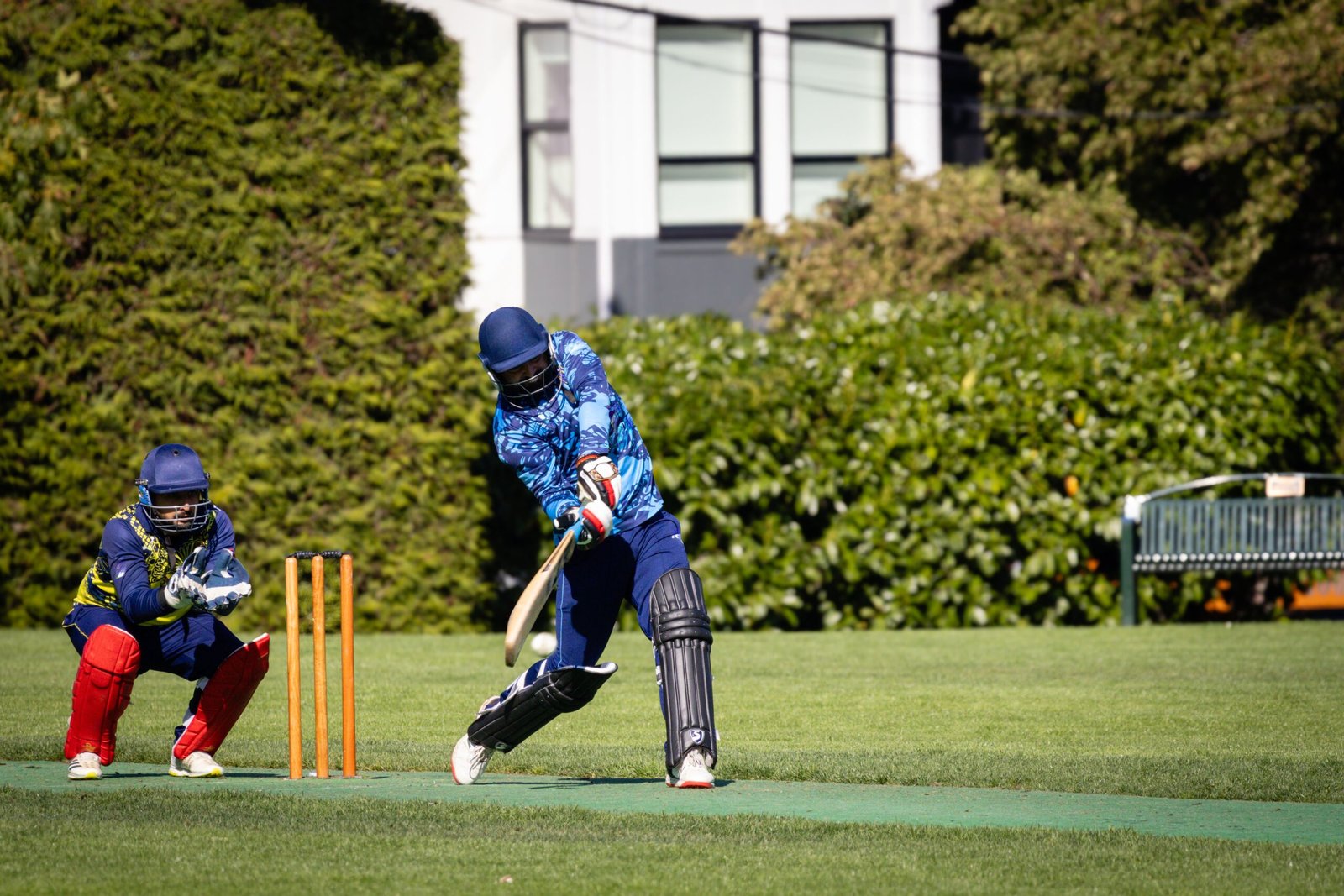
Cricket can look bewildering from the outside. Matches can last five days and still end in a draw, players wear white and stop for tea, and commentators talk about “silly mid-off” and “nightwatchmen” as though everyone knows what they mean. Yet the basic idea is simple: one team tries to score runs, and the other tries to get them out.
Cricket is followed by billions of people around the world, particularly in India, England, Australia, Pakistan and South Africa, and its profile in the United States is growing, helped by Major League Cricket and the sport’s place at the 2028 Los Angeles Olympics. This guide explains the rules, formats and scoring so you can follow your first match with confidence.
The Basic Idea of Cricket
Two teams of 11 players take turns to bat and to field. The batting team tries to score as many runs as possible. The fielding team tries to dismiss batters and limit the runs scored. After each team has batted for the agreed number of innings, the side with more runs wins.
An “innings” is one team’s turn to bat. In shorter formats, each team bats once. In Test cricket, each team usually bats twice.
The Pitch and the Field
The Pitch
Cricket is played on a large oval field, but the action focuses on a rectangular strip in the middle called the pitch, which is 22 yards (about 20 metres) long. At each end stand three wooden stumps topped with two small bails. This structure is called the wicket.
The Field
The playing area is surrounded by a boundary, which may be marked by a rope. Fielders are positioned around the field in locations with traditional names such as slip, gully, point, cover, mid-on, square leg and fine leg. You do not need to memorise them all. Simply knowing that fielders are positioned to stop runs and catch the ball is enough to start.
The Key Roles
- Batter: tries to hit the ball and score runs. Two batters are on the pitch at once.
- Bowler: delivers the ball towards the batter. Unlike baseball pitchers, bowlers deliver the ball with a straight arm, usually after bouncing it on the pitch.
- Wicketkeeper: stands behind the stumps, catching balls the batter misses and attempting dismissals.
- Fielders: the remaining players, who stop runs and take catches.
- Umpires: two on-field officials make decisions, supported by a third umpire who reviews video replays.
How Runs Are Scored
Runs are scored in three main ways.
Running Between the Wickets
After hitting the ball, the two batters can run to each other’s end of the pitch. Each completed trip scores one run. If the ball is hit far enough, they may run two or three times.
Boundaries
If the ball reaches the boundary rope after touching the ground, the batter scores four runs. If it crosses the boundary without bouncing, the batter scores six runs. These are the most common scoring shots in modern cricket.
Extras
Extras are runs awarded without the batter hitting the ball:
- Wide: a ball delivered too far from the batter to hit. One run is added, and the ball must be bowled again.
- No-ball: an illegal delivery, such as overstepping the front line. One run is added, and the next delivery is a “free hit” in limited-overs formats.
- Bye: the batter misses the ball, but the batters run.
- Leg bye: the ball hits the batter’s body, not the bat, and they run.
Overs and Deliveries
Bowling is organised into overs, with each over made up of six legal deliveries. After each over, a different bowler takes over from the opposite end of the pitch. A single bowler cannot bowl two consecutive overs.
In limited-overs cricket, each bowler has a maximum number of overs they may bowl, which prevents teams from relying on one or two bowlers throughout.
How Batters Get Out
Cricket has several ways of dismissing a batter. These are the most common:
- Bowled: the ball hits the stumps and dislodges the bails.
- Caught: a fielder catches the ball after the batter hits it, before it bounces.
- Leg before wicket (LBW): the ball would have hit the stumps but hit the batter’s leg first, subject to certain conditions about where it pitched and where it struck.
- Run out: the fielding side breaks the wicket with the ball while the batter is out of their ground.
- Stumped: the wicketkeeper breaks the wicket while the batter is out of their crease after missing a delivery.
- Hit wicket: the batter knocks their own stumps with their bat or body.
Other, rarer dismissals exist, such as handling the ball or obstructing the field.
A team’s innings ends when 10 of its 11 batters are out (called “all out”) or, in limited-overs formats, when the allotted overs are completed.
The Three Main Formats
Cricket’s biggest strength, and the main source of beginner confusion, is that it comes in multiple formats.
Test Cricket
Test matches are the traditional, longest form of international cricket. They are played over up to five days, with each team batting up to twice. A day normally includes three sessions separated by lunch and tea breaks, and a minimum number of overs is scheduled each day.
A Test can end in a win, a loss, a draw or, very rarely, a tie. A draw occurs if time runs out before the match reaches a result, which surprises many newcomers but is part of the format’s tactical appeal. Famous series such as the Ashes between England and Australia are played as Tests.
One Day Internationals (ODIs)
ODIs are limited-overs matches in which each team faces up to 50 overs. A game typically lasts around seven or eight hours. The format sits between Tests and T20, mixing tactics with fast scoring. The Cricket World Cup, held every four years, uses the ODI format.
Twenty20 (T20)
T20 is the shortest major format, with each team facing 20 overs. A match lasts around three hours. It is the most accessible version for newcomers and dominates franchise leagues such as the Indian Premier League (IPL), the Big Bash League in Australia and Major League Cricket in the United States.
The Hundred
In England and Wales, a newer format called The Hundred uses 100-ball innings rather than overs of six balls. It was designed to attract new audiences, and it runs in the summer with men’s and women’s competitions. Some fans love it, others prefer traditional formats, but it has helped introduce cricket to younger audiences.
| Format | Overs per Side | Typical Length | Innings per Team |
|---|---|---|---|
| Test | Unlimited (up to 5 days) | Up to 5 days | Up to 2 |
| ODI | 50 | About 7-8 hours | 1 |
| T20 | 20 | About 3 hours | 1 |
| The Hundred | 100 balls | About 2.5-3 hours | 1 |
Rules That Change Between Formats
Fielding Restrictions
In limited-overs cricket, there are restrictions on how many fielders may stand outside a marked circle near the batter. These are most strict during the initial “powerplay” overs, which encourages attacking batting early in the innings. The exact number of powerplay overs differs between ODIs and T20s.
Bowling Limits
In ODIs, each bowler may bowl a maximum of 10 overs. In T20s, the limit is four overs. Tests have no such limit.
The Follow-On
In Test cricket, if the team batting second finishes with a deficit that exceeds a set margin, the leading team can ask them to bat again immediately. This is called the follow-on. In a standard five-day Test, the margin is 200 runs.
How a Match Is Won
In limited-overs cricket, the side that scores more runs wins. If the team batting second passes the target, the match ends immediately, and the result is described by the number of wickets remaining. If the team batting first wins, the margin is described in runs.
In Test cricket, a team must score more runs than the opposition across both innings and dismiss all 10 opposing batters twice. If either condition is not met before time expires, the match is drawn.
If rain interrupts a limited-overs match, the Duckworth-Lewis-Stern method may be used. It adjusts targets based on the resources, meaning overs and wickets, remaining. The calculation is complicated, but the idea is to make results fair when play is shortened.
Technology and Reviews
Modern cricket uses technology to support umpires. The Decision Review System (DRS) allows teams to challenge on-field decisions, with the third umpire using tools such as ball-tracking, edge-detection technology and slow-motion replays. Teams have a limited number of unsuccessful reviews, so tactical use matters.
Common Terms Beginners Hear
- Duck: a batter dismissed without scoring.
- Century: 100 runs by a single batter.
- Maiden over: an over in which no runs are scored from the bat.
- Wicket: both the stumps themselves and the act of dismissing a batter.
- Declaration: a captain ends their own innings early in Tests, aiming to leave enough time to dismiss the opposition.
- Strike rate: runs scored per 100 balls faced, used heavily in limited-overs cricket.
How to Watch Your First Match
- Start with T20. It is shorter and easier to follow.
- Focus on the contest. Watch how bowlers try to beat batters and how fielders are positioned.
- Follow the scoreboard. Learn the basic format, such as 150/4, meaning 150 runs for four wickets lost.
- Listen to commentary. Expert commentators typically explain tactics, and many broadcasts include replays.
- Move on to Tests. After you are comfortable, Test cricket’s patience and tactics offer greater depth.
Conclusion
Cricket’s reputation for complexity is partly deserved, but the foundation is straightforward. One side bats, the other bowls and fields, runs are scored, and wickets fall. Once you understand overs, dismissals and the three main formats, most of the sport falls into place.
The best way to learn is to watch. Begin with a short T20 match, then explore ODIs and Tests as your interest grows. In time, the long afternoons, the tactical battles and the sudden shifts in momentum are likely to become part of the appeal.