The Premier League is the top division of English football and one of the most watched sports competitions in the world. Twenty clubs compete each season for the title, for places in European competitions and to avoid relegation. The drama runs from August to May, with fixtures every weekend and midweek rounds around the busiest parts of the calendar.
If you are new to English football, the structure can feel unfamiliar, especially if you come from a sport with playoffs and no relegation. This guide explains how the Premier League works, from its history and format to its rules, qualification places and financial regulations. It also covers where the competition fits within English football’s wider system.
What Is the Premier League?
The Premier League was founded in 1992, when the top clubs in the old First Division broke away to form a new competition with its own broadcasting deals. Since then, it has become a global brand, with matches broadcast around the world.
It is run by the Premier League organisation, owned by the member clubs, which negotiates broadcasting rights, enforces rules and organises the season. The competition operates separately from the Football Association (FA), which governs football in England as a whole.
How the Season Works
The Basics
The league has 20 clubs. Each club plays every other club twice, once at home and once away, for a total of 38 matches. A season therefore contains 380 matches.
The campaign typically starts in August and ends in May. Fixtures take place mostly on weekends, with midweek rounds and holiday-period fixtures, including the famous Boxing Day programme. After a World Cup year, the schedule is adjusted, so the start of the 2026-27 season was set to fit around the summer tournament.
Points and Standings
- Win: 3 points
- Draw: 1 point
- Loss: 0 points
The team with the most points at the end of the season wins the title. If two teams finish level on points, the tiebreakers are goal difference, then goals scored. If the tie involves the title, relegation or a European place that cannot be separated by these measures, the league can arrange a play-off match, though this has never been needed in the Premier League era.
Champions
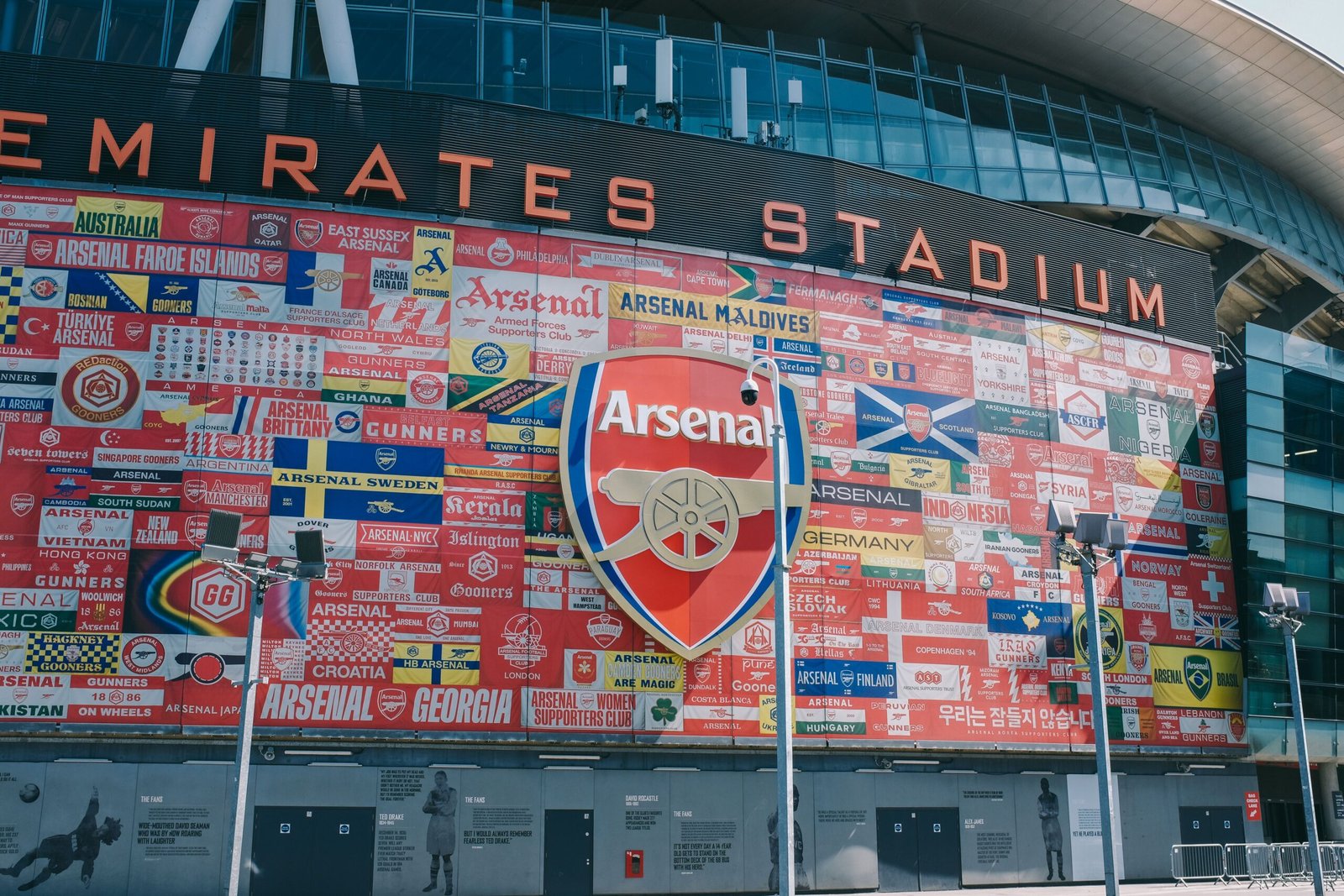
The reigning champions are Arsenal, who won the 2025-26 title, their first league championship in 22 years. They succeeded Liverpool, who had won in 2024-25. Before that, Manchester City had dominated with a run of titles in the 2010s and 2020s. Manchester United remain the most successful club in Premier League history by number of titles, with a large lead at the top of the all-time list.
The Teams
The Top Six and the Rest
Commentators often talk about a “Big Six”: Arsenal, Chelsea, Liverpool, Manchester City, Manchester United and Tottenham Hotspur. These clubs have the largest revenues and global followings, but the label is less reliable than it used to be, as teams such as Newcastle United and Aston Villa have emerged as contenders for European places.
The league also features smaller clubs, local sides and newly promoted teams, which is part of its appeal. Their goals are usually survival, a strong mid-table finish or a surprise run towards Europe.
Ownership
Club ownership varies widely. Some clubs are owned by American investors, others by Gulf-based groups or consortiums, and some by local businesspeople or supporter-led trusts. The Premier League has an Owners’ and Directors’ Test, which checks fitness to run a club.
Which Teams Are in the League?
Membership changes every season because of promotion and relegation. Check the Premier League’s official website for the current list of 20 clubs.
Promotion and Relegation
English football’s pyramid includes the Premier League and the English Football League (EFL), which contains the Championship, League One and League Two.
Relegation
The bottom three clubs in the Premier League are relegated to the Championship at the end of the season. That creates meaningful stakes for teams at the bottom of the table, who battle until the final weeks.
Promotion
The top two teams in the Championship are promoted automatically. The third promotion place is decided by a play-off between the teams finishing third to sixth. The Championship play-off final, held at Wembley, is often described as the richest single match in football because of the revenue that promotion brings.
European Qualification
Premier League positions determine entry into UEFA competitions:
| Competition | Typical Qualification Route |
|---|---|
| Champions League | Top finishers in the league (usually top five, with the number depending on UEFA’s allocation) |
| Europa League | Teams just below Champions League places, plus certain cup winners |
| Conference League | Further places, usually next in line |
The exact allocation changes from season to season based on how English clubs perform in Europe and on cup results. Some English clubs also qualify through winning a European competition. Our guide to the Champions League explains how those competitions work.
The Domestic Cups
Premier League clubs also compete in two domestic knockout tournaments:
- FA Cup: open to clubs across the English football pyramid, from the Premier League down to non-league teams. It is famous for upsets and for its single-match knockout rounds.
- EFL Cup (League Cup): contested by clubs in the top four divisions.
Winning either cup can earn a European place, and many clubs use the cups as a route to silverware.
Key Rules and Squad Regulations
Squad Registration
Premier League clubs register a squad of up to 25 players aged 21 or older, with rules around homegrown players. At least eight of those 25 must be “homegrown”, meaning they spent three years in an English or Welsh club’s youth system before age 21. Under-21 players have more flexibility and are not subject to the same limit.
Substitutions
Teams can name nine substitutes on the bench and make five substitutions in a match, within three windows plus half-time.
VAR and Technology
The Premier League uses VAR and semi-automated offside technology. For a detailed breakdown of how those work and why they are controversial, see our guide to how VAR works in football.
Transfer Windows
Clubs may register new players only during the summer and January transfer windows. Our explainer on the football transfer window covers the details.
Financial Rules
Financial regulation is one of the most debated parts of the modern Premier League. For several years, clubs have been bound by profitability and sustainability rules (PSR), which limit how much they can lose over a rolling period. Breaches have led to points deductions in some high-profile cases.
The league has also been moving towards a squad-cost approach, similar to UEFA’s, which ties spending on wages, transfers and agent fees to a club’s revenue. Details have been subject to change and legal challenge, so check the Premier League’s current handbook for the latest rules.
Money and Broadcasting
Broadcasting is the economic engine of the league. Domestic rights are sold to broadcasters, and overseas rights are sold by territory. In the UK, live matches are shown on a mixture of pay-TV and streaming platforms. Games are not broadcast at the traditional Saturday 3pm kick-off time, a long-standing blackout designed to protect attendance at lower-league matches.
Revenue is distributed among clubs, with an equal share, a share based on league position and a share based on how many times matches are televised. This gives all clubs substantial income, which is one reason that clubs promoted from the Championship can compete with more established teams.
How the Premier League Differs From American Leagues
For readers from the US, a few features can be surprising.
- No playoffs: the champion is the team with the most points after 38 games.
- Promotion and relegation: clubs can move between divisions, so there is no permanent set of teams.
- No draft or salary cap: clubs buy and sell players on the transfer market, and spending is controlled through financial regulations.
- Draws are normal: a match can end level, and a draw earns a point.
Our comparison of the NFL and the Premier League explores those contrasts in more detail.
How to Follow the Season
- Pick a club. Supporting one team gives the season a narrative.
- Watch the table. The race for the title, European places and survival run in parallel.
- Learn the calendar. Key periods include the opening weekend, the winter schedule, the international breaks and the final day.
- Follow official sources. The Premier League website and app list fixtures, results and broadcast details.
- Mind the time zones. US viewers often watch early on weekend mornings, while UK fans enjoy a mixture of lunchtime, afternoon and evening kick-offs.
The Women’s Game
Women’s top-flight football in England is organised separately in the Women’s Super League (WSL). It has grown rapidly, with record attendances and strong broadcast interest, boosted by the Lionesses’ European Championship wins in 2022 and 2025.
Conclusion
The Premier League is built on a simple idea: 20 clubs, 38 games, three points for a win and a table that decides everything. Around that core sit promotion and relegation, European qualification, domestic cups and financial rules that shape how clubs operate.
For new fans, the key is to start with the basics, then gradually learn the details such as qualification places and squad regulations. Once the structure makes sense, the season’s rhythm becomes clear, and so does the passion it generates: the title race, the fight for Europe and the battle to avoid the drop, all unfolding week by week.