The FIFA World Cup is the largest single-sport tournament on the planet. Every four years, national teams from around the world compete for the right to be called world champions, and billions of people watch some part of it. The 2026 edition, held across the United States, Canada and Mexico, was the biggest yet.
But how does the tournament actually work? How does a country earn a place, how are the groups formed, what happens if a match is tied, and who decides where the event is held? This guide explains the entire process in plain language, using the 2026 tournament as the main example.
What Is the FIFA World Cup?
The World Cup is organised by FIFA, football’s global governing body. The men’s tournament began in 1930 in Uruguay and has been held every four years since, apart from 1942 and 1946 because of the Second World War.
The trophy is awarded to the national team that wins the final. Eight nations have won the men’s tournament: Brazil (five titles), Germany (four), Italy (four), Argentina (three), France (two), Uruguay (two), Spain (two) and England (one). Spain joined the multiple-winner list in 2026, beating Argentina 1-0 after extra time in the final at MetLife Stadium in New Jersey, to add to their 2010 title.
A separate FIFA Women’s World Cup has run since 1991, and the next edition is scheduled for Brazil in 2027.
The 2026 Tournament at a Glance
The 2026 World Cup took place from 11 June to 19 July 2026 and was the first to feature 48 teams, up from 32. It was also the first hosted by three countries: the United States, Canada and Mexico. In total, 104 matches were played across 16 host cities.
| Feature | 2022 (Qatar) | 2026 (USA, Canada, Mexico) |
|---|---|---|
| Teams | 32 | 48 |
| Groups | 8 groups of 4 | 12 groups of 4 |
| Total matches | 64 | 104 |
| Host nations | 1 | 3 |
| First knockout round | Round of 16 | Round of 32 |
How Teams Qualify
A country does not simply sign up. It must qualify through its continental confederation, and each confederation is allocated a number of places.
The Six Confederations
- UEFA (Europe)
- CONMEBOL (South America)
- CAF (Africa)
- AFC (Asia)
- CONCACAF (North and Central America and the Caribbean)
- OFC (Oceania)
For 2026, the allocation was approximately: 16 places for Europe, 9 for Africa, 8 for Asia, 6 for South America, 6 for North and Central America (including the three hosts) and 1 for Oceania, with two further places decided through an intercontinental play-off tournament. The expansion gave smaller footballing nations a better chance of reaching the finals.
The Host Nations
The three host countries qualified automatically for 2026. Normally, hosts receive an automatic berth, which is why you sometimes see weaker teams appear at tournaments hosted on their soil.
Qualifying Competitions
Each confederation runs its own qualifying competition over two or three years. Formats vary, from round-robin leagues in South America to multi-stage group and play-off systems in Europe, Africa and Asia. This is why qualification matches take place in international windows, usually spread across the calendar year.
The Draw and the Group Stage
Once the 48 teams are known, FIFA holds a draw. Teams are placed in pots based on FIFA’s world rankings, with hosts and top-ranked sides seeded to keep them apart early. The draw also takes geography into account, since teams from the same confederation are generally kept in separate groups, though European sides may meet because of the number of qualifiers.
Group Format
In 2026, the tournament had 12 groups of four teams. Each team plays the other three once. Points work as in most competitions: three for a win, one for a draw, and none for a loss.
Who Advances
The top two teams in each group advance automatically, along with the eight best third-placed teams. That produces 32 teams in the knockout stage. The third-place ranking looks at points, goal difference and goals scored across all 12 groups.
Tiebreakers
If teams are level on points, tiebreakers decide the order. Under the regulations published for 2026, FIFA gave priority to the head-to-head record between the tied teams before looking at overall goal difference, a change from earlier tournaments. Check FIFA’s regulations for the full list of criteria, which also includes fair play records and, as a last resort, a drawing of lots.
The Knockout Stage
After the group stage, the competition becomes single elimination. In 2026, the rounds were:
- Round of 32 (new for this edition)
- Round of 16
- Quarter-finals
- Semi-finals
- Third-place play-off
- Final
Each match is a single game. If it is level after 90 minutes, there is 30 minutes of extra time, followed by a penalty shootout if still tied.
In 2026, Spain beat Austria, Portugal, Belgium and France on their way to the final, and England finished third. It was England’s best World Cup finish since their 1966 victory.
How the Host Is Chosen
Hosts are chosen by a vote of FIFA member associations at the FIFA Congress, following a bidding process. Bids are evaluated on infrastructure, stadiums, accommodation, transport, financial guarantees and human rights commitments.
The next men’s tournaments have already been awarded:
- 2030: Spain, Portugal and Morocco, with opening matches planned for Uruguay, Argentina and Paraguay to mark the centenary of the first tournament.
- 2034: Saudi Arabia.
Both awards drew debate. The 2030 centenary arrangement is unusual because it spans three continents, while the 2034 decision has prompted discussion about climate, human rights and the schedule.
Rules of Play
World Cup matches follow the Laws of the Game published by IFAB. Key points include:
- Eleven players per side, with up to five substitutions allowed, plus an additional one in extra time.
- VAR and semi-automated offside technology to assist referees. Our explainer on how VAR works covers the process.
- Yellow and red cards, with suspensions carrying over between matches. Yellow card accumulation rules mean that cautions can lead to a ban at critical stages.
- Added time: referees add significant stoppage time to compensate for delays, a trend that began at the 2022 tournament.
Prize Money and the Trophy
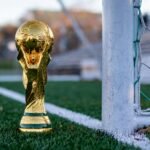
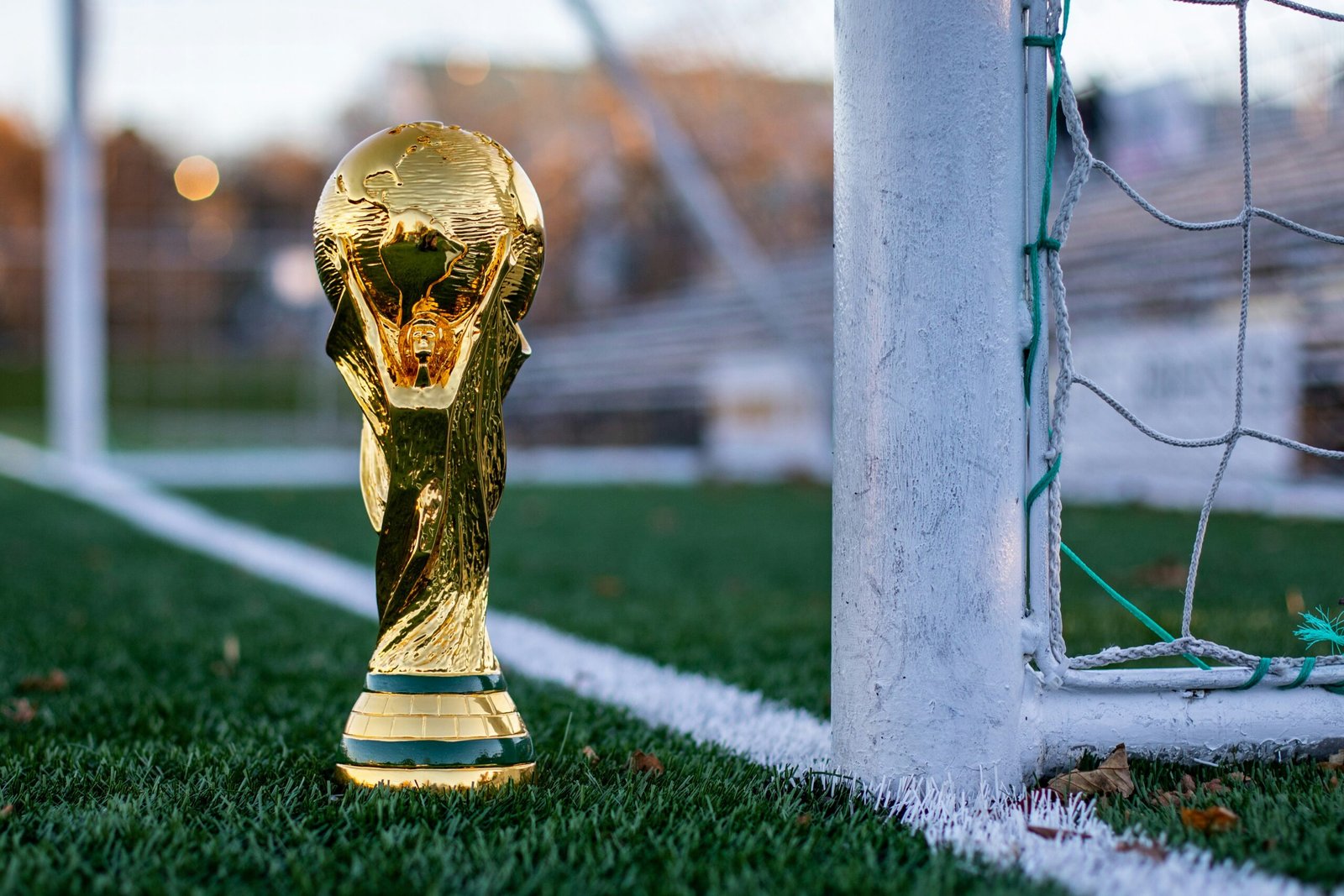
The winning team receives the FIFA World Cup Trophy, which is made of 18-carat gold and has been presented since 1974. Winners hold it briefly on the pitch, but FIFA keeps the original and presents a replica to the champions. Prize money is paid to all participating federations, with the amount increasing with progress in the tournament. Check FIFA’s official announcements for exact sums, which are updated for each edition.
The Role of Broadcasting and Fans
The World Cup is as much a media event as a sporting one. Broadcast rights are sold by region, so viewers in the UK and US typically watch on different channels. In recent years, both free-to-air and subscription broadcasters have shared coverage.
The 2026 final also featured the tournament’s first-ever half-time show, an addition that reflected the influence of American sporting traditions on the event’s presentation.
For travelling fans, the distances in North America were a major factor, with matches spread across a continent, which is very different from the more compact format of Qatar 2022.
The Women’s World Cup
The FIFA Women’s World Cup has grown dramatically since its first edition. The 2023 tournament in Australia and New Zealand expanded the field to 32 teams. The United States has won the most titles, with four, and Spain won in 2023. The 2027 edition in Brazil will be the first in South America.
Comparing the World Cup With Other Tournaments
| Tournament | Participants | Frequency | Format |
|---|---|---|---|
| FIFA World Cup | National teams, worldwide | Every 4 years | Groups then knockout |
| UEFA European Championship | European national teams | Every 4 years | Groups then knockout |
| Copa América | South American teams plus guests | Every 4 years | Groups then knockout |
| Club World Cup | Club champions | Every 4 years (expanded) | Groups then knockout |
Why the World Cup Matters
For many nations, the World Cup is a moment of shared identity. Players who spend most of the year in club football represent their countries on the biggest stage, and tournaments produce stories that last for decades: Maradona’s 1986 run, Brazil’s 1970 team, France’s 1998 triumph, Messi’s 2022 victory and Spain’s win in 2026.
It also has major economic and political effects, shaping tourism, infrastructure investment and diplomacy for host nations.
Conclusion
The FIFA World Cup works through a clear sequence: qualification through confederations, a draw into groups, a group stage, a knockout bracket and a final. The 2026 expansion to 48 teams made it larger than ever, with new rounds and new hosting arrangements.
Understanding the system makes it easier to follow the drama as it unfolds, from the tension of the final group games to the decisive moments of the knockout rounds. With Spain as the reigning champions, the road to the 2030 tournament will soon begin, and the cycle of qualification, hope and heartbreak starts again.